Same-Day Dental Implants (Immediate Load) — Myth or Reality?
Medically reviewed by Dr. Alexander V. Antipov, DDS— Board-Certified Oral & Maxillofacial Surgeon · Diplomate, American Board of Oral & Maxillofacial Surgery (ABOMS) · California Dental License #50724
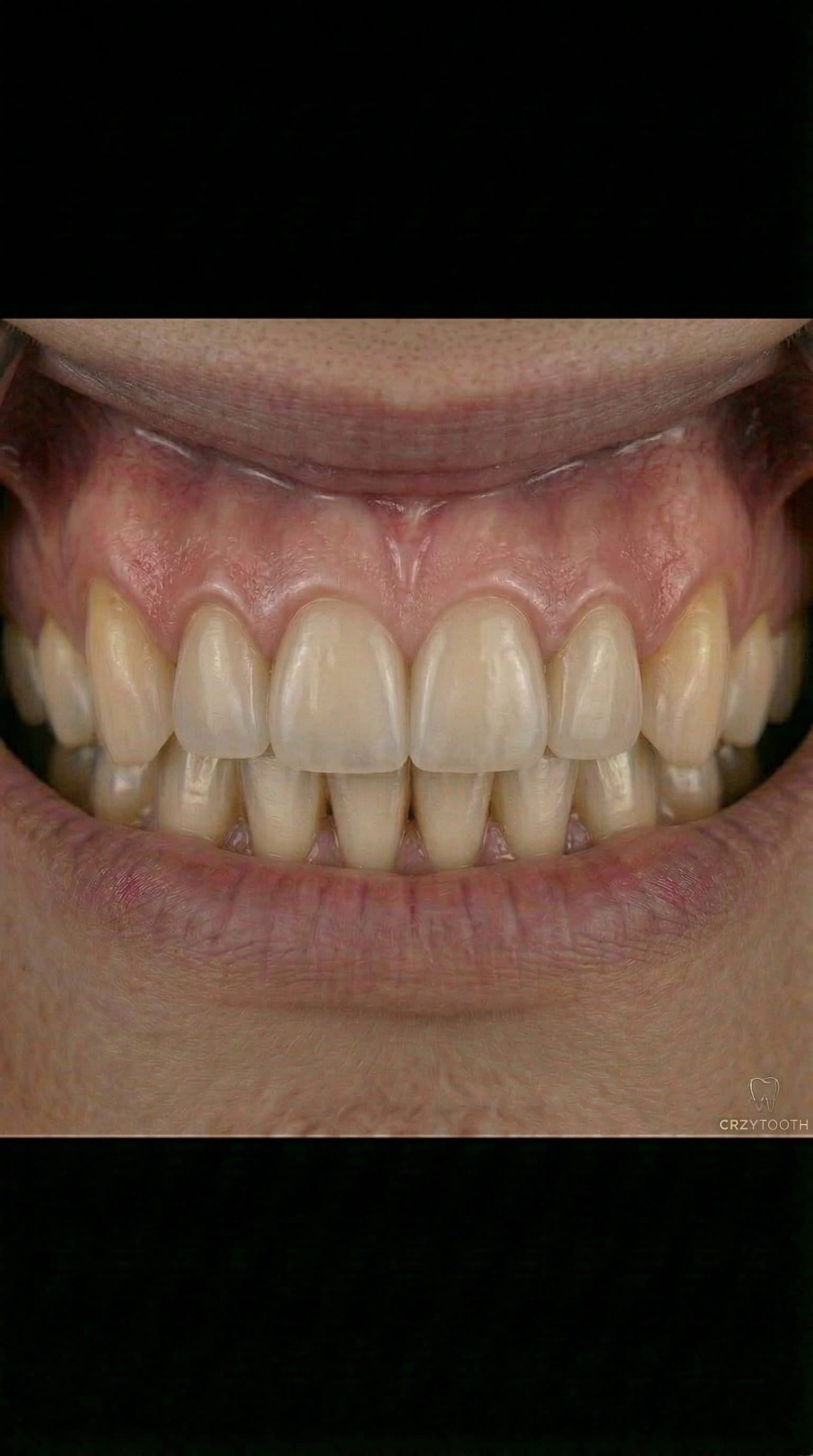
“Same-day implants” and “teeth in a day” are advertising lines that every patient researching dental implants will see. What part of this is reality, and what part is marketing? Here is what you actually receive the day of surgery — and why the final result comes a few months later, not in six hours.
TL;DR
- • You leave the office the day of surgery with fixed temporary teeth on your implants.
- • The final prosthesis is delivered 4–6 months later, after full osseointegration.
- • Candidacy requires sufficient bone density and primary implant stability (≥35 Ncm).
- • Most often used for All-on-4 and All-on-6 (full-arch) cases.
- • Smoking, severe osteoporosis, and uncontrolled diabetes are relative contraindications.
What Immediate Loading Actually Means
The classic implant protocol is “two-stage”: the implant is placed, allowed to heal and fuse to the bone (osseointegration) over 3–6 months, and only then is a crown or prosthesis attached. During that interval, the patient wears a removable temporary or goes without a tooth in the implant area.
Immediate load is a protocol in which a temporary prosthesis is secured to the implants the same day they are placed. The implant begins bearing functional load right away. Two factors make this possible: high primary stability of the implant (achieved through thread design and placement angle) and load distribution across multiple implants tied into one rigid prosthesis.
When It Works
Immediate loading is the standard for All-on-4 and All-on-6 protocols: 4 or 6 implants in a single arch supporting a fixed temporary prosthesis on day one. The shared load across multiple anchors compensates for the fact that each individual implant has not yet fully integrated.
For a single-tooth implant, immediate loading is possible less often — it requires ideal anatomy and dense bone. More commonly, a non-functional “dummy” temporary crown is placed without any chewing load for the first several weeks.
What “One Day” Actually Includes
- Before surgery day: 3D CT, in-person exam, virtual planning, fabrication of the navigation guide and the temporary prosthesis in the lab.
- Surgery day — morning: anesthesia (IV sedation), removal of any remaining problem teeth, and placement of implants using the navigation guide.
- Surgery day — after placement:the surgeon verifies primary stability of each implant. If all read ≥35 Ncm, the temporary prosthesis is secured. If any read less, delayed loading is chosen instead (uncommon, but it happens).
- Evening of the same day: you go home with fixed teeth in place. You can speak and drink. Chewing begins the next day, once the anesthesia has cleared.
What to Expect Afterwards
- — First 2 weeks: soft diet, gradual reduction of swelling, follow-up visit on day 7.
- — 2–8 weeks: gradual return to firmer foods. Meticulous oral hygiene; a water flosser is essential.
- — 3–6 months: full osseointegration. At this point, final scans are taken and the permanent prosthesis is fabricated.
- — The final prosthesisis typically zirconia or a PMMA composite on a titanium frame, designed to last 15–25 years with proper care.
What an Honest Surgeon Will Tell You
Immediate loading is a safe, decades-proven protocol when the indications are right. But an honest surgeon will say:
- — The temporary really is temporary. It looks good and functions well, but it is not the final esthetic result, and it is less durable than the permanent prosthesis.
- — Not every case is a candidate.If your anatomy does not allow it, delayed loading is the safer path — not risking the loss of an implant.
- — Smoking significantly worsens the prognosis. Quitting, or at minimum sharply reducing, for 4 weeks before and 8 weeks after surgery is strongly recommended.
- — Hygiene is critical.Implants cannot decay, but the surrounding soft tissue can become inflamed (mucositis, peri-implantitis). Professional cleanings every 4–6 months are non-negotiable.
Frequently Asked Questions
Is it really “teeth in one day”?
Yes — with a qualification. The day of surgery, you leave the office with fixed temporary teeth on your implants. The final prosthesis is made 4–6 months later, after full osseointegration and soft-tissue stabilization. The temporary looks and functions well enough for normal life and work, but it is not the final restoration.
Who is not a candidate for immediate loading?
If primary stability is below ~35 Ncm, immediate loading is not worth the risk. Also: patients with severe osteoporosis, uncontrolled diabetes, active smoking of more than 10 cigarettes a day, or significant bone loss in the implant zone. The decision is made after CT and clinical exam.
How does the temporary differ from the permanent prosthesis?
The temporary is typically acrylic or composite — lighter, less durable, and not a perfect match to the final smile design. The permanent is zirconia or PMMA on a titanium base, designed for years of service, and custom-fabricated in a dental lab for that specific patient.
Can I eat the day of surgery?
On surgery day, soft liquids only — no chewing load on the implants. For the first 2–4 weeks, a soft diet (purees, fish, eggs, yogurt). Firmer foods are reintroduced gradually as healing progresses. Tough meat, nuts, and hard crusts wait until the permanent prosthesis is in place.
How long does the surgery itself take?
Extractions + implant placement + temporary prosthesis — typically 4–6 hours depending on the case. Under IV sedation, you will have no memory of the procedure. After 30–60 minutes of observation, you go home (a chaperone is required).
Sources & References
Peer-reviewed and authoritative references supporting the information in this article.
- AAOMS — Dental Implant Surgery Procedure
- Esposito M, Grusovin MG et al. — Cochrane Review: Interventions for replacing missing teeth — different times for loading dental implants
- Maló P, Rangert B, Nobre M — All-on-4 immediate-function concept with Brånemark System implants
- NIH — National Institute of Dental and Craniofacial Research: Dental Implants
Dr. Alexander V. Antipov
Board-certified oral and maxillofacial surgeon specializing in dental implants, All-on-4 and All-on-6 full-arch restoration, same-day implant protocols, and corrective jaw surgery. Serving patients throughout Northern California.
Are You a Candidate for Same-Day Implants?
A complimentary 3D CT and in-person exam are the only way to know for certain whether immediate loading is right for your case — or whether a delayed protocol will deliver a better long-term result.